
- Home
- Myths

It’s a commonly peddled myth, especially in old science fiction movies, but it’s actually completely false.
The nitrogen in your body would expand and you’d bloat severely, and you'd eventually die.
However, your skin is far too tough to let everything explode out of it.
If you have ever wished upon a star, you may be shocked to learn it wasn’t a star at all.
The idea that shooting stars are literally stars streaking across the sky might be one of the most popular of all myths in astronomy.
When you see a shooting star, you're actually witnessing the bright flare of piece of debris, likely to be no bigger than a grain of sand, burning up in our atmosphere.
They are properly known as meteors. If a fragment makes it to Earth’s surface, it is called a meteorite.
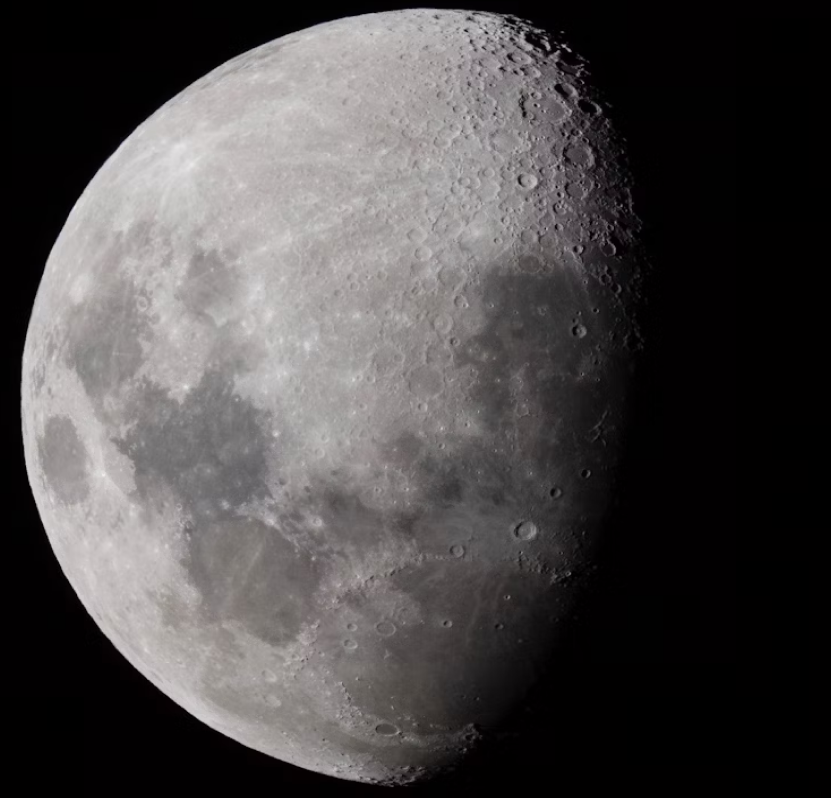
There is a side of the Moon that, from Earth, we can never see. This much is true.
However, it’s a complete myth that it is in complete darkness all the time.
The Moon has daytime and night-time just as the Earth does, though each lasts two weeks, so both sides get sunlight at some point.
The reason it’s been historically called the ‘dark side’ is because it’s mysterious, and until recently, not much was known about it. This year, China launched a probe to explore the far side of the Moon, to learn more.
However, the first images of the far side of the moon were taken in 1959.
A popular fringe theory holds that humans are alien's gift to Earth.
Some people say we were delivered here during a near pass to Earth of a life-bearing planet called Nibiru.
This alleged planet, which has not actually been observed by astronomers, is said to skirt the edges of the solar system and swing inward from time to time
Alien visitors to Earth are occasionally depicted in science fiction as being brought down by their own alien nature. Lacking immunity to Earth-based bacteria, they all die of infections.
This wouldn't really happen. "Alien life forms wouldn't come here only to be done in by our bacteria, unless they were related biochemically to humans," Shostak told IEEE Spectrum."
Bacteria would have to be able to interact with their biochemistry to be dangerous, and their ability to do that is far from a sure thing."